Imagine a cake. Imagine it is the most delicious cake you've ever had. It's moist, fluffy, chocolatey - you can't imagine having a better cake. Well, I can imagine having a better cake. Like most people, I have a sense of false humility when it comes to my personal achievements - nothing is ever quite right and everything can always be better. That delicious chocolate cake that you're imagining, frosted with a light, tart, whipped cream frosting and garnished with fresh raspberries, could have been fluffier - maybe if I had just beaten those egg whites a little longer, perhaps if I had folded them into the batter a little more gently, what if I had measured my baking powder more carefully - it could have tasted better - would chopped baking chocolate have been better than cocoa powder, what if I hadn't cheaped out and used the pure vanilla extract instead of the imitation?
This is the level of neurotic anxiety I experience in my own kitchen at home where I have all the right ingredients and all the right tools (actually, more like three of each tool). Now, imagine this level of crazy in a kitchen with no electric mixer, no cupcake forms, no cake or pie pans, no vanilla extract, and no measuring cups. Oh, and the oven is the most confusing thing you've ever seen.
In general, the ingredients available for everyday cooking aren't actually that different in Germany. I mean, you still have your pastas, assorted vegetables, oils, vinegars, sauces, and standard meats. BUT I've found it harder to find reasonable sized bags of frozen vegetables, tomato sauce tends to taste funny, and I can't find real ham anywhere.
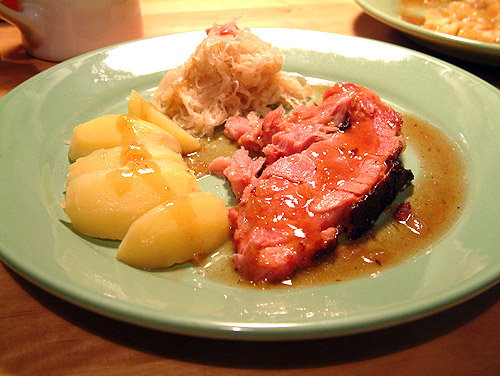
Do you have any idea how much I start craving ham when I know I can't have it? I have cooked something called Stielkasseler twice, which is the closest thing I can find to ham. To be perfectly fair, it was delicious; however, here is an example of Kasseler cooked in a very German fashion:
 |
| photo credit: winnegirl.de |

After slicing into the meat, I spread the honey mustard mixture onto the meat and in between the slices and I marinate it for a few hours in the refrigerator. I really have no clue if that helps at all, but I did it once since I had the time, so that's how I do it now. Then later I cook it until it is heated completely through and ready to be devoured.
I think the reason that this isn't really German is because of the added sweetness that the honey gives the meat. I've grown up with maple glazed ham or ham cooked with pineapple, so a little honey isn't weird for me. The spicy mustard might have helped with keeping my German friends' from finding the honey too odd.
I'd like to say something deep about my study abroad experience and how it is making me open my eyes to new cultures and new foods, but I think my next post will be on the differences between German side dishes and the side dishes I prefer - hint: it isn't Rotkohl. However, I will follow that up with a post raving about the delicious cooking I have encountered in the homes of my generous and extremely hospitable German friends!
